

 Deutsch
 Français
 Türkçe
On-site maintenance
Connect recurring visits and required evidence in one traceable workflow.

Endurion Orbit connects handoffs between service intake, dispatch and technicians. Confirmed details, ownership, materials and feedback stay with the case, while critical decisions remain with the responsible staff.
Orbit integrates into existing service operations. This page does not provide live production dispatch.
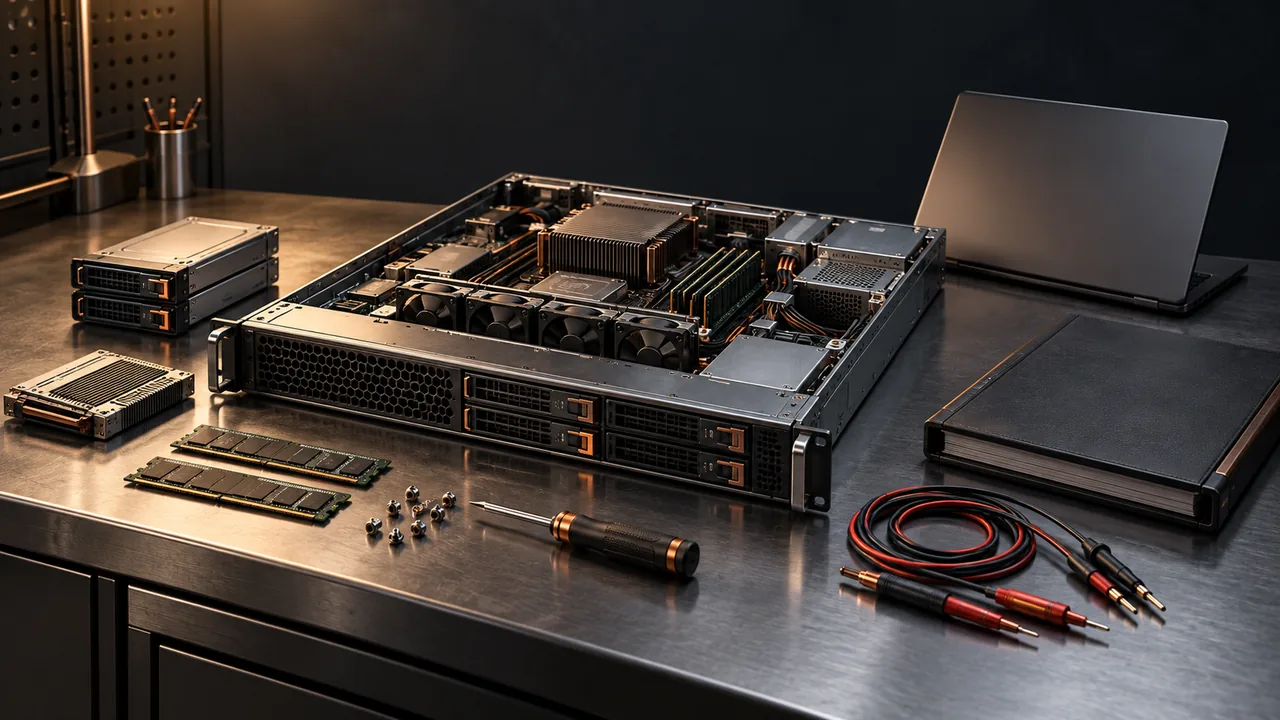
Serial numbers sit in email, appointments in calendars and technician reports in a mobile app. Orbit connects their handoffs. Priority, qualifications and safety approval are explicitly agreed with the responsible staff rather than stripped of context.
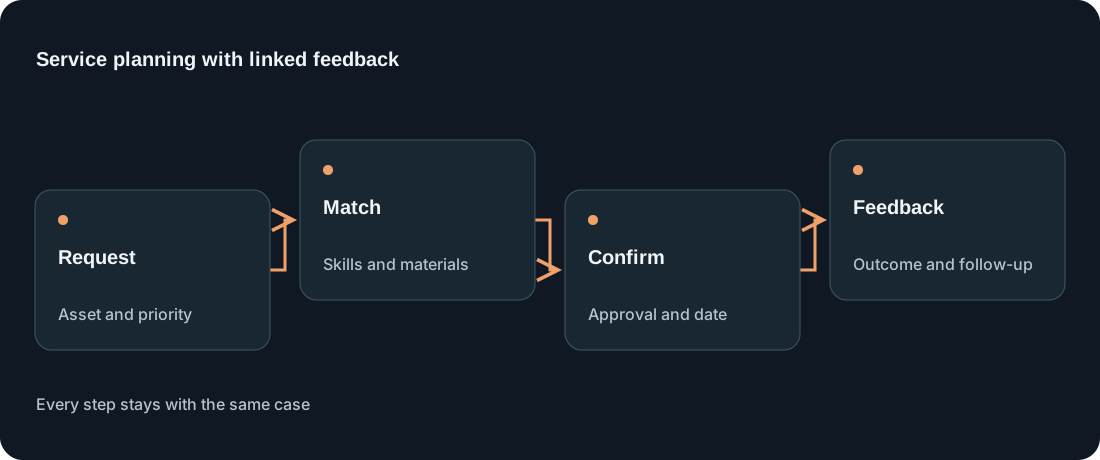
Swipe the diagram sideways. Full step descriptions follow below.
Capture equipment, site, urgency and contract status from validated details.
Consider availability, skills and required parts through approved systems.
Dispatch or service leads confirm critical visits and notify those involved.
Link field reports, closeout status and remaining tasks to the original case.
Planning and feedback share one traceable case. Existing service software remains authoritative unless otherwise agreed.
Connect recurring visits and required evidence in one traceable workflow.
Route clarifications, escalations and updates deliberately.
Link photos, checklists and reports to the service case.
Illustrative scenario, not a customer reference or measured result.
A refrigeration service receives faults by phone and email. Intake, dispatch and technician reporting repeatedly re-enter data. Orbit connects those handoffs and keeps missing information with the case.
Discuss your own workflowRecord the fault, clarify urgency, call technicians, copy dates into lists and send status updates separately.
Qualify the case, compare availability and materials in suitable systems, obtain dispatch approval and attach feedback to the job.
Fault intake, scheduled maintenance, follow-ups, escalations, customer updates and structured field-technician reports.
Dispatchers retain critical job decisions. Rules can support suggestions and notifications; qualifications, safety and exceptions remain explicitly governed.
Ticketing, ERP or field-service software remains authoritative. Calendars, Outlook, Teams and mobile applications can exchange status and feedback through available interfaces.
An agreed follow-up requests required details. The case remains visibly incomplete rather than proceeding with guessed equipment or customer data.
Safety-critical dispatch decisions and business priorities remain with dispatchers. Offline devices, missing master data, shifts and qualifications require explicitly defined exceptions.
Suitable APIs or imports may connect the existing application. Availability, permissions and offline behaviour must be checked before commitment.
We define case types, responsibilities, escalations and permitted mobile handoffs. The pilot also checks declined jobs, interrupted connections and late feedback.
Failures are logged and assigned. Retries, duplicate checks and manual handling have explicit rules so jobs do not silently disappear.
Change the assumptions. This models potential released capacity, not guaranteed savings or a quote.
Monthly volume × (current minutes − projected minutes) ÷ 60 = hours. Multiply by assumed hourly labor cost for illustrative time value. Implementation, licensing, review and operating costs are not deducted.
Use these answers to define technical prerequisites, remaining review work and the first project scope.
Dispatchers retain critical job decisions. Rules can support suggestions and notifications; qualifications, safety and exceptions remain explicitly governed.
An agreed follow-up requests required details. The case remains visibly incomplete rather than proceeding with guessed equipment or customer data.
Suitable APIs or imports may connect the existing application. Availability, permissions and offline behaviour must be checked before commitment.
Failures are logged and assigned. Retries, duplicate checks and manual handling have explicit rules so jobs do not silently disappear.
Customer agreements, shifts, qualifications and safety-critical decisions set the boundaries. Failures, offline use and delayed feedback are defined before the pilot. Automated messages do not replace professional escalation.
More about implementationUsually not. Your existing system remains the system of record; Endurion Orbit reduces gaps around it.
The responsible person under your process. Notifications do not replace professional prioritization.
Before scheduling, clarify the fault, location, required qualification and available parts. Treat safety approvals separately. An open calendar slot alone does not make a visit feasible.
After the visit, record findings, used parts and remaining work. Unfinished tasks stay explicitly open. Agreed feedback brings dispatch, customer communication and follow-up onto the same footing.
Let us review your systems, input data and the smallest useful pilot. Final scope and integrations are agreed after discovery.